How coordinated reconnaissance quietly emerged from a world of scattered automation.
Something subtle has changed in the background noise of the internet.
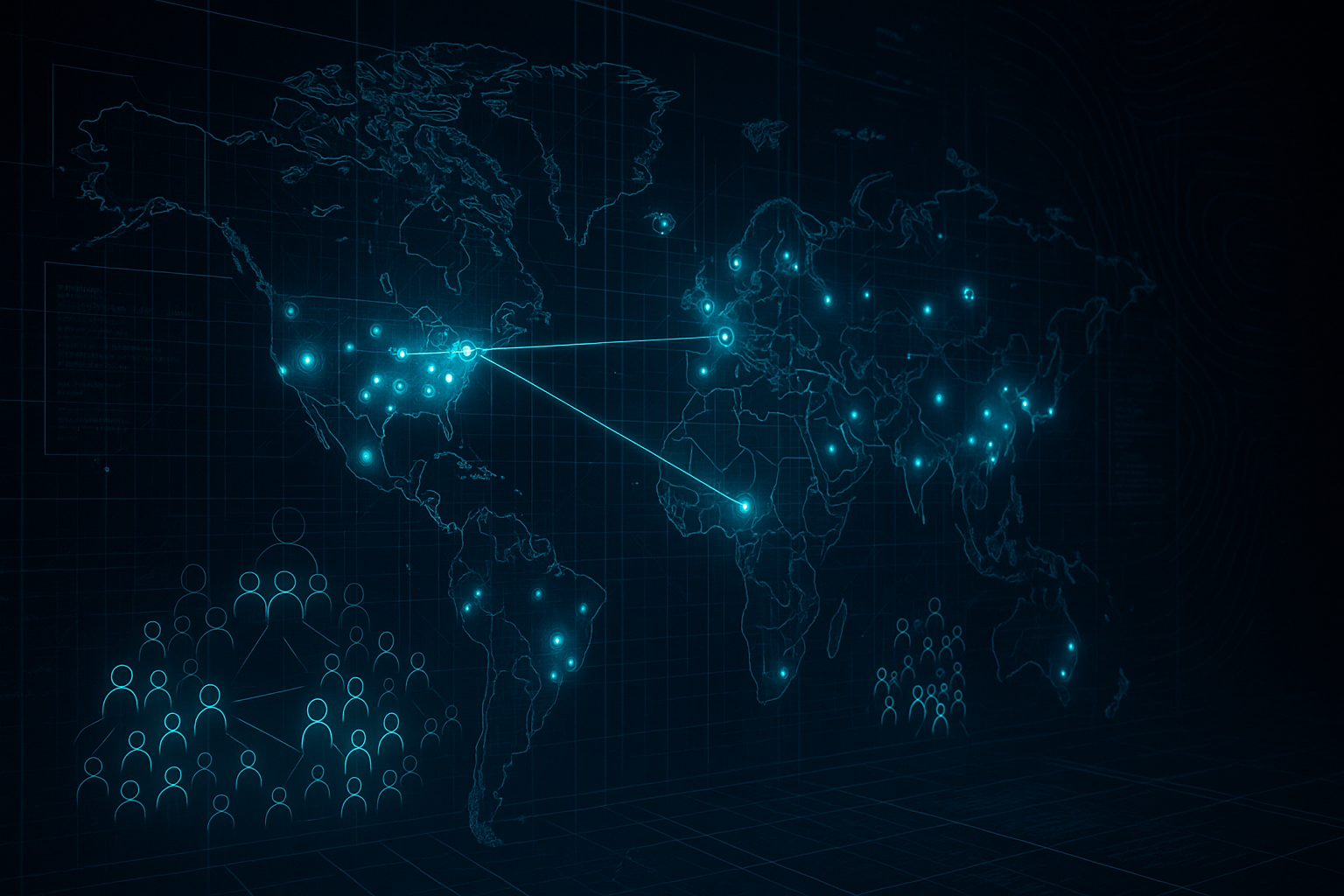
What once looked like random, isolated scanning now behaves like a coordinated movement — different IPs, different ASNs, different parts of the world, yet somehow following the same rhythm. The probes arrive quietly, never loud enough to trigger alarms by themselves, but unmistakable when viewed in aggregate. A pattern begins to form where none should exist.
This convergence is not accidental. It is the fingerprint of modern rotating bot infrastructures.
For years, security teams grew accustomed to a predictable reconnaissance landscape. You saw the same long-lived scanners hitting the same endpoints with the same behavior. There were outliers, sure, but the majority of traffic behaved like an old, familiar background hum.
Then cloud elasticity arrived, and that hum fractured.
Today, much of global probing traffic comes from disposable infrastructure that barely exists long enough to be catalogued. Short-lived cloud instances send out a tiny reconnaissance burst and disappear before any reputation system can make sense of them. On their own, each probe looks like an anomaly.
Together, they resemble a swarm.
The surprising part is not the volume — it’s the synchrony. IPs that should have no relationship with one another begin repeating nearly identical patterns within tight time windows, as if orchestrated by the same underlying automation.
Insight: When unrelated networks behave with the same cadence, the true identity isn’t in the IP — it’s in the workflow controlling it.
Deep Analysis
Attackers didn’t start by aiming for stealth.
They arrived here through evolution.
Early automation was messy and persistent. A bot would sit on a server, scan whatever it could, and stay active long enough to build a reputation. Defenders eventually grew effective at tracking these fixed sources. So attackers shifted to a new model built on churn.
Rotating infrastructures swap IPs the way older tools swapped user-agents. Serverless functions, on-demand containers, ephemeral VMs — all capable of living for only seconds yet performing the same reconnaissance logic as their predecessors.
What emerges from this ecosystem is a kind of “dispersed persistence.” No single IP is stable, yet the behavior persists across dozens or hundreds of short-lived identities.
The attacker stays constant. Only the surface changes.
In large cloud providers, where instances come online in milliseconds, scanning workflows move through regions like migrating weather fronts. A scan that originates in one AS may reappear minutes later from another, repeating the same structure, the same timing, the same reconnaissance intent. These aren’t random hits — they are coordinated segments of a larger distributed system.
Real-World Impact
The convergence effect reshapes nearly every defensive assumption we used to rely on.
The idea that “a malicious IP will appear malicious again” collapses when the same attacker rotates through hundreds of clean addresses every hour. Blocklists grow less relevant. Attribution grows more uncertain. And the moment you identify a hostile pattern, the infrastructure that produced it has already dissolved.
This is why so much of today’s reconnaissance goes unnoticed: it doesn’t trip volumetric thresholds or brute-force signatures. It hides behind the normal fluctuations of cloud traffic.
Yet the pattern remains — persistent, patient, and global.
What defenders now face is not a set of bad IPs, but a fluid system capable of dissolving and reforming continually, across ASNs and even continents.
Technical Breakdown
Although the individual probes appear ordinary, their structure exposes a deeper unity.
Requests often carry minimal headers, sometimes malformed, sometimes overly generic — the telltale signs of automated modules rather than real browsers. Their timing reveals more than their content: quiet cycles that repeat across multiple networks, as if governed by an internal scheduler rather than human behavior.
Cloud providers amplify this dynamic.
A significant portion of global scanning now originates from infrastructure designed to be elastic, disposable, and fast. Attackers exploit these traits effortlessly: spinning up small, targeted scanning bursts, then shutting everything down before defenders can adjust.
Across supernets, you see the same drift: clusters of fresh IPs probing identical endpoints within minutes of each other, despite originating from entirely different ASNs. They don’t persist long enough to build a reputation, but they echo the same playbook.
Insight: The more ephemeral the infrastructure, the more consistent the reconnaissance pattern becomes. Automation rewards uniformity.
What IPIntel.ai Observes in the Wild
Viewed at scale, these rotating infrastructures reveal a shared behavior landscape.
Bot-to-human ratios fluctuate heavily during off-peak hours, when automation dominates global traffic. Reconnaissance waves move through cloud regions in bursts, repeating similar request structures regardless of source. Zero-click sessions — probes with no user interaction and no session context — form a large silent layer beneath normal traffic.
Even when scanning slows to a crawl, the signature remains: the pacing, the cadence, the modular fingerprints of automated frameworks. Entire supernets light up momentarily as bot operators move from one cloud cluster to another, using the same tooling but different identities.
This is not random background noise. It is structured reconnaissance masked by churn.
Future Outlook
Everything points toward further refinement.
As automation frameworks grow more advanced, bot operators will gain even more precise control over timing, distribution, and behavioral blending. Cloud instances will become cheaper, faster, and broader in geographic reach. Supernet-scale behavior will grow harder to distinguish from legitimate traffic. Machine-driven orchestration will allow attackers to adjust reconnaissance paths on the fly, shaping traffic like a fluid instead of a set of discrete events.
We may soon face reconnaissance workflows that adapt in real time — adjusting pacing, altering fingerprints, and minimizing overlap — all while distributing their presence across thousands of disposable identities.
The infrastructure will vanish faster.
The patterns will not.
Conclusion
Internet-wide scanning no longer belongs to persistent bots.
It belongs to rotating systems that move like distributed organisms, converging on targets through rhythm rather than brute force.
Understanding these convergence patterns is essential to interpreting the modern threat landscape. The attacker may change identities every few seconds, but the underlying behavior still leaves a signature — quiet, coordinated, and increasingly global.
The reconnaissance layer of the internet has never been more fluid, or more organized.
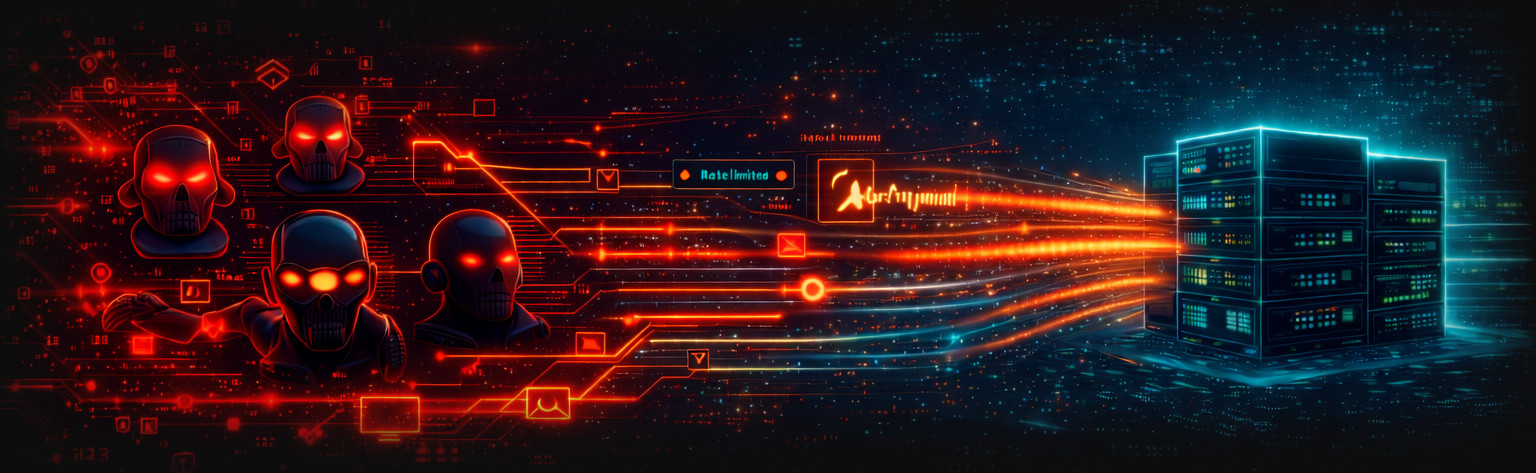 Modern bots don’t attack WAFs.
They quietly bypass them.
Modern bots don’t attack WAFs.
They quietly bypass them.
 Introducing IPIntel.ai - Real-Time IP Scoring for a Modern, Automated Internet